
1z0-100 Sample Questions & Answers
Free Oracle Linux 5 and 6 System Administration practice questions with worked answers and explanations. See how the ExamJungle simulator prepares you — then jump into the full test.
Launch the full 1z0-100 simulator →Showing 6 of 12 free samples.
- Question 1
Examine these statements and their output taken right after successful install of Oracle Linux:
[root@FAROUT /] rpm -q firstboot
Firstboot -1.110.10-1.0.2.e16.x86_64
[root @FAROUT /] # chkconfig - - list firstboot
Firstboot 0:off 2:off 3:off 4:off 5:off 6;off
[root@FAROUT /] # /etc/sysconfig/firstboot
RUN_FIRSTBOOT=NO
What is the conclusion?
Show answer & explanation
Correct answer: A
Explanation:
Firstboot is set to off for all levels.
Exampl The rm command below remove or delate the firstboot file in order to make sure the firstboot program running when we restart or reboot the Fedora machine. [root@fedora ~]# rm /etc/sysconfig/firstboot rm: remove regular file `/etc/sysconfig/firstboot'? y
[root@fedora ~]#
Then check and make sure that firstboot program or firstboot service is run when your Fedora startup/boot up.
Check firstboot services [root@fedora ~]# chkconfig --list firstboot firstboot 0:off 1:off 2:off 3:off 4:off 5:off 6:off
[root@fedora ~]# - Question 2Select 3
Which three settings can be controlled by using the chage breemar command as the root user, to modify the parameters in the /etc/shadow file?
Show answer & explanation
Correct answers: A, C, E
A, C, E -- Explanation:
A: chage -E, --expiredate EXPIRE_DATE Set the date or number of days since January 1, 1970 on which the user's account will no longer be accessible.
CE: You need to use chage command to setup password aging.
The chage command changes the number of days between password changes and the date of the last password change. This information is used by the system to determine when a user must change his/her password.A, C, E -- Explanation:
A: chage -E, --expiredate EXPIRE_DATE Set the date or number of days since January 1, 1970 on which the user's account will no longer be accessible.
CE: You need to use chage command to setup password aging.
The chage command changes the number of days between password changes and the date of the last password change. This information is used by the system to determine when a user must change his/her password.A, C, E -- Explanation:
A: chage -E, --expiredate EXPIRE_DATE Set the date or number of days since January 1, 1970 on which the user's account will no longer be accessible.
CE: You need to use chage command to setup password aging.
The chage command changes the number of days between password changes and the date of the last password change. This information is used by the system to determine when a user must change his/her password. - Question 3
Examine this extract from the /etc/ssh/sshd_config file:
passwordAuthentication no
What is the effect of this parameter settings on the use of openSSH commands on both the client and server?
Show answer & explanation
Correct answer: B
Explanation:If you set PasswordAuthentication to no, you will no longer be able to use a login and password to authenticate and must use a login and public key instead (if PubkeyAuthentication is set to yes).
- Question 4Select 4
Which four statements are true about software on the Oracle Public YUM server?
Show answer & explanation
Correct answers: B, C, D, F
B, C, D, F -- Explanation:
The Oracle public yum server offers a free and convenient way to install the latest Oracle Linux packages as well as packages from the Oracle VM installation media via a yum client.
Oracle provides all errata and updates for Oracle Linux via the Public Yum service, which includes updates to the base distribution, but does not include Oracle-specific software.
F: By default, all new installations of Oracle Linux 6 Update 5 are automatically configured to use the public yum update service. If you subsequently register the system with ULN, the public yum service is automatically disabled.B, C, D, F -- Explanation:
The Oracle public yum server offers a free and convenient way to install the latest Oracle Linux packages as well as packages from the Oracle VM installation media via a yum client.
Oracle provides all errata and updates for Oracle Linux via the Public Yum service, which includes updates to the base distribution, but does not include Oracle-specific software.
F: By default, all new installations of Oracle Linux 6 Update 5 are automatically configured to use the public yum update service. If you subsequently register the system with ULN, the public yum service is automatically disabled.B, C, D, F -- Explanation:
The Oracle public yum server offers a free and convenient way to install the latest Oracle Linux packages as well as packages from the Oracle VM installation media via a yum client.
Oracle provides all errata and updates for Oracle Linux via the Public Yum service, which includes updates to the base distribution, but does not include Oracle-specific software.
F: By default, all new installations of Oracle Linux 6 Update 5 are automatically configured to use the public yum update service. If you subsequently register the system with ULN, the public yum service is automatically disabled.B, C, D, F -- Explanation:
The Oracle public yum server offers a free and convenient way to install the latest Oracle Linux packages as well as packages from the Oracle VM installation media via a yum client.
Oracle provides all errata and updates for Oracle Linux via the Public Yum service, which includes updates to the base distribution, but does not include Oracle-specific software.
F: By default, all new installations of Oracle Linux 6 Update 5 are automatically configured to use the public yum update service. If you subsequently register the system with ULN, the public yum service is automatically disabled. - Question 5Select 2
Explanation:
The Oracle public yum server offers a free and convenient way to install the latest Oracle Linux packages as well as packages from the Oracle VM installation media via a yum client.
Oracle provides all errata and updates for Oracle Linux via the Public Yum service, which includes updates to the base distribution, but does not include Oracle-specific software.
F: By default, all new installations of Oracle Linux 6 Update 5 are automatically configured to use the public yum update service. If you subsequently register the system with ULN, the public yum service is automatically disabled.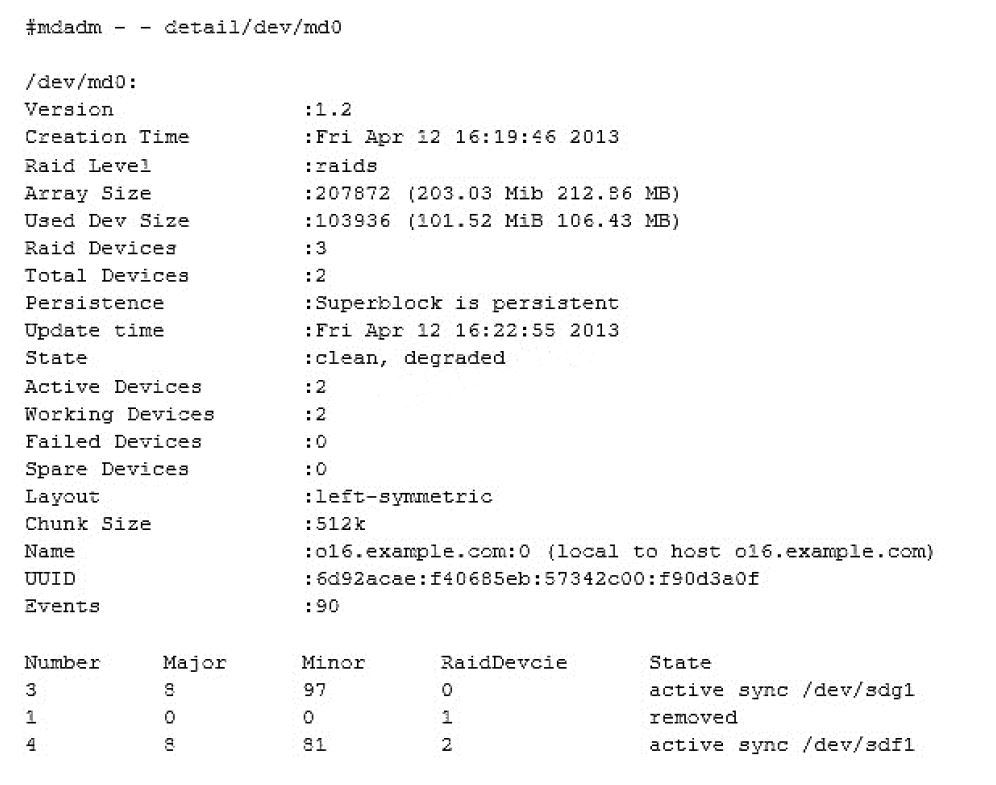
Show answer & explanation
Correct answers: A, D
A, D
A, D
- Question 6Select 2
Examine the command on its output:
[root@FAROUT ~] # modprobe -v nfs
Insmod /lib/modules/2.6.39-100.0.12.e16uek.x86_64/kernel/fs/nfs_common/nfs_acl.ko insmod /lob/modules/2.6.39-
100.0.12.e16uek.x86_64/kernel/net/sunrpc/auth_gss/auth_rpcgss.ko
Insmod /lib/modules/2.6.39-100.0.12.e16uek.x86_64/kernel/fs/fscache/fscache/ko
Insmod /lib/modules/2.6.39-100.0.12.e16uek.x86_64/kernel/fs/locked.ko
Insmod /lib/modules/2.6.39-100.0.12.e16uek.x86_64/kernel/fs/nfs/nfs.ko
Which two statements are true about the modprobe command?
Show answer & explanation
Correct answers: A, B
A, B
A, B
Ready for the real thing?
The full 1z0-100 simulator has every exam-style question, timed mode, and instant scoring.