
AGACNP-BC Sample Questions & Answers
Free Adult-Gerontology Acute Care Nurse Practitioner practice questions with worked answers and explanations. See how the ExamJungle simulator prepares you — then jump into the full test.
Launch the full AGACNP-BC simulator →Showing 6 of 12 free samples.
- Question 1AdvancedSelect 2
Core Competencies · Advanced pharmacology
A 23-year-old male polytrauma patient with severe traumatic brain injury and multiple extremity fractures exhibits persistently subtherapeutic vancomycin troughs despite standard high-dose therapy. A 24-hour measured creatinine clearance reveals 195 mL/min/1.73 m2, confirming augmented renal clearance (ARC). Which TWO clinical factors most frequently drive augmented renal clearance in critically ill acute care patients? (Select TWO)
Show answer & explanation
Correct answers: A, E
ARC is driven by hyperdynamic systemic states with increased cardiac output and renal plasma flow, commonly encountered in young trauma, burn, and sepsis patients without baseline kidney disease.
Systemic inflammation combined with aggressive crystalloid resuscitation increases glomerular filtration, accelerating elimination of hydrophilic, renally cleared antimicrobials.
- Question 2Intermediate
Core Competencies · Advanced pharmacology
A 56-year-old male with decompensated alcoholic cirrhosis and spontaneous bacterial peritonitis has a serum albumin level of 1.7 g/dL. When administering highly protein-bound antimicrobials or antiepileptics (such as ceftriaxone or phenytoin), which pharmacokinetic consequence directly results from this patient's severe hypoalbuminemia?
Show answer & explanation
Correct answer: B
Deficient serum albumin reduces drug binding capacity, elevating the pharmacologically active unbound fraction. This expands the volume of distribution and enhances hepatic or renal clearance.
- Question 3Intermediate
Core Competencies · Advanced physical assessment
During morning rounds in the cardiac intensive care unit, an AGACNP performs a cardiovascular physical assessment on a 72-year-old patient with end-stage heart failure. Which combination of bedside physical findings most specifically reflects advanced cardiogenic hypoperfusion (the "cold" clinical phenotype)?
Show answer & explanation
Correct answer: A
Physical markers of cardiogenic hypoperfusion include a narrow proportional pulse pressure, cool clammy extremities, delayed capillary refill, and resting tachycardia reflecting intense compensatory vasoconstriction.
- Question 4Beginner
Core Competencies · Advanced physical assessment
An AGACNP evaluates an acute spinal cord injury patient in the neuro-intensive care unit. While assessing deep tendon reflexes and upper motor neuron pathway integrity, the practitioner tests for ankle clonus. Which examination technique correctly elicits this physical sign?
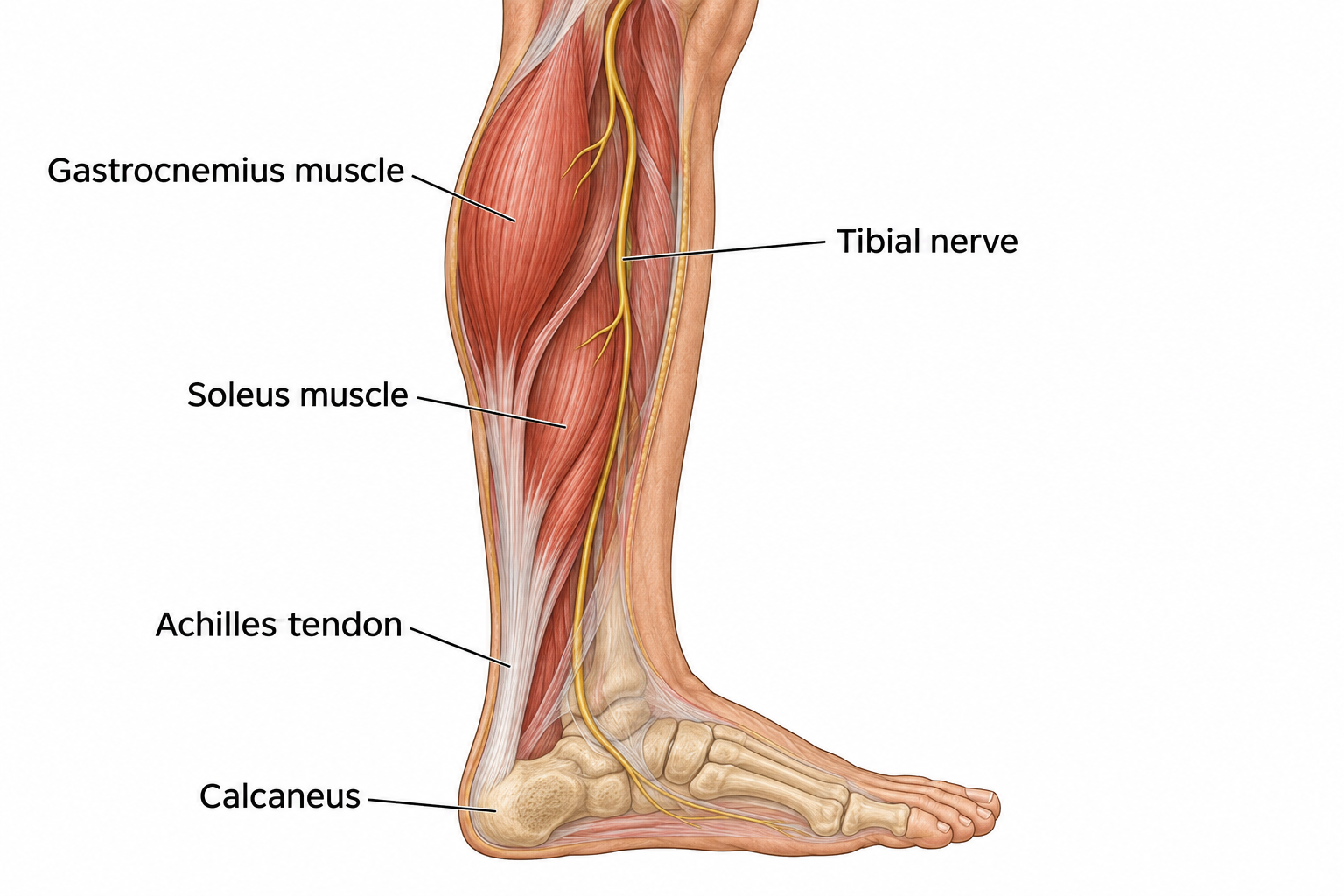
Show answer & explanation
Correct answer: D
Ankle clonus is elicited by supporting the knee in partial flexion, briskly dorsiflexing the foot at the ankle, and holding it in dorsiflexion to observe for rhythmic, repetitive plantarflexion beats.
- Question 5Beginner
Clinical Practice · Standards of care and evidence-based principles
A 66-year-old male with acute pyelonephritis presents to the intensive care unit in septic shock. After the infusion of 30 mL/kg of balanced crystalloid solution within 2.5 hours, his blood pressure is 82/48 mmHg (mean arterial pressure 59 mmHg) and heart rate is 108 beats/min. Based on international sepsis guidelines, which vasoactive medication is the definitive first-line agent to restore hemodynamic stability?
flowchart TD A[Septic Shock Hypotension] --> B[30 mL/kg Crystalloid Resuscitation] B --> C{MAP >= 65 mmHg?} C -->|No| D[1st Line Agent: Norepinephrine] D --> E{Escalating Dose Needed?} E -->|Yes| F[Add 2nd Line Agent: Vasopressin 0.03 U/min]Show answer & explanation
Correct answer: A
Norepinephrine is the first-line vasopressor in septic shock because of its potent alpha-1 vasoconstriction and modest beta-1 support, with significantly lower tachyarrhythmias and lower mortality than dopamine.
- Question 6Intermediate
Clinical Practice · Standards of care and evidence-based principles
A 70-year-old female with septic shock secondary to acute cholangitis remains hypotensive with a mean arterial pressure of 58 mmHg despite receiving appropriate fluid loading and norepinephrine titrated to 0.35 mcg/kg/min. In accordance with current clinical practice guidelines, what is the most appropriate next step in vasoactive therapy?
Show answer & explanation
Correct answer: A
Guidelines recommend adding fixed-dose vasopressin (0.03 units/min) when norepinephrine reaches 0.25-0.5 mcg/kg/min to restore vascular tone via V1 receptors and reduce adrenergic requirements.
Ready for the real thing?
The full AGACNP-BC simulator has every exam-style question, timed mode, and instant scoring.