
FNP-BC Sample Questions & Answers
Free Family Nurse Practitioner Certification (FNP-BC) practice questions with worked answers and explanations. See how the ExamJungle simulator prepares you — then jump into the full test.
Launch the full FNP-BC simulator →Showing 6 of 12 free samples.
- Question 1Intermediate
Assessment · Risk assessment (e.g., genetic, behavioral, sexual, lifestyle, cultural, social determinants of health)
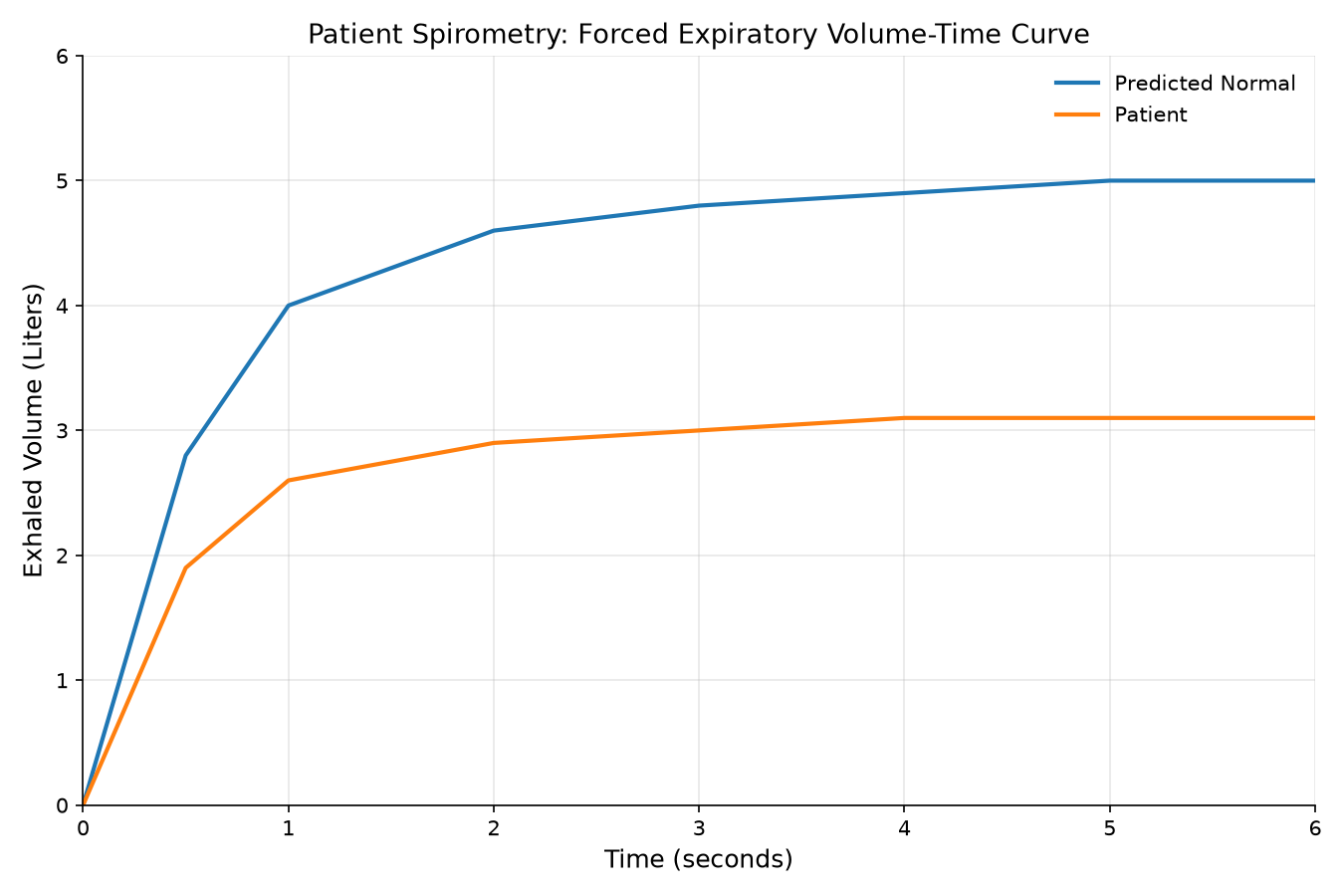
A 66-year-old retired industrial pipefitter presents with progressive exertional dyspnea and a nonproductive cough. When conducting a comprehensive occupational risk assessment for suspected occupational interstitial pulmonary disease, which characteristic feature of toxic mineral exposure most frequently obscures the causal link between workplace hazards and clinical disease onset?
Show answer & explanation
Correct answer: C
Occupational lung diseases such as asbestosis and silicosis exhibit a prolonged latency period of 15 to 40 years between exposure and symptom onset.
- Question 2Intermediate
Assessment · Risk assessment (e.g., genetic, behavioral, sexual, lifestyle, cultural, social determinants of health)
A 58-year-old Chinese American male arrives for a post-surgical follow-up visit accompanied by his elderly parents and adult daughter. The patient quietly nods when addressed, while his father steps forward to speak and actively inquires about surgical recovery, medications, and wound care. To demonstrate ethnically and culturally sensitive risk assessment and family engagement within a collectivist framework, how should the family nurse practitioner respond?
Show answer & explanation
Correct answer: B
Culturally congruent practice in collectivist traditions respects the role of elder family leaders by addressing their questions while engaging the patient.
- Question 3Intermediate
Diagnosis · Pathogenesis and pathophysiology, clinical manifestations, and implications of disease states
A 44-year-old warehouse worker presents with sharp lower back pain radiating down the posterolateral aspect of his right thigh and calf to the lateral foot. Physical examination demonstrates a positive straight-leg raise at 35 degrees on the right and decreased sensation over the S1 dermatome. What primary mechanical pathophysiology underlies this patient's clinical presentation?
Show answer & explanation
Correct answer: A
Sciatic radiculopathy is typically caused by herniation of the nucleus pulposus through the annulus fibrosus, mechanically compressing traversing nerve roots.
flowchart TD A[Nucleus Pulposus Extrusion] --> B[Mechanical Compression of S1 Root] B --> C[Radicular Pain Down Leg] B --> D[Positive Straight-Leg Raise] - Question 4Advanced
Diagnosis · Pathogenesis and pathophysiology, clinical manifestations, and implications of disease states
A 55-year-old female presents for evaluation of progressive exertional dyspnea and orthopnea. On cardiovascular auscultation at the cardiac apex, the family nurse practitioner identifies a soft first heart sound (S1) followed immediately by a blowing, high-pitched holosystolic murmur that radiates into the left axilla. Which valvular lesion is responsible for this physical finding?
Show answer & explanation
Correct answer: C
Mitral regurgitation produces a soft S1 and a holosystolic apical murmur that radiates to the left axilla due to backward flow into the left atrium during systole.
- Question 5Beginner
Diagnosis · Pathogenesis and pathophysiology, clinical manifestations, and implications of disease states
A 2-month-old infant is brought to the clinic for a well-child examination. The mother expresses concern regarding a bright red, well-demarcated, raised, soft vascular plaque measuring 1.5 cm on the infant's left forearm. The mother notes it was not apparent at birth but appeared at two weeks of age and has enlarged. Physical examination confirms a benign superficial infantile hemangioma. What is the expected clinical pathogenesis and natural history of this lesion?
Show answer & explanation
Correct answer: B
Infantile hemangiomas display a characteristic natural course: rapid proliferation in the first months of life, followed by slow, spontaneous involution.
- Question 6Intermediate
Diagnosis · Selecting appropriate diagnostic test(s) and/or procedures
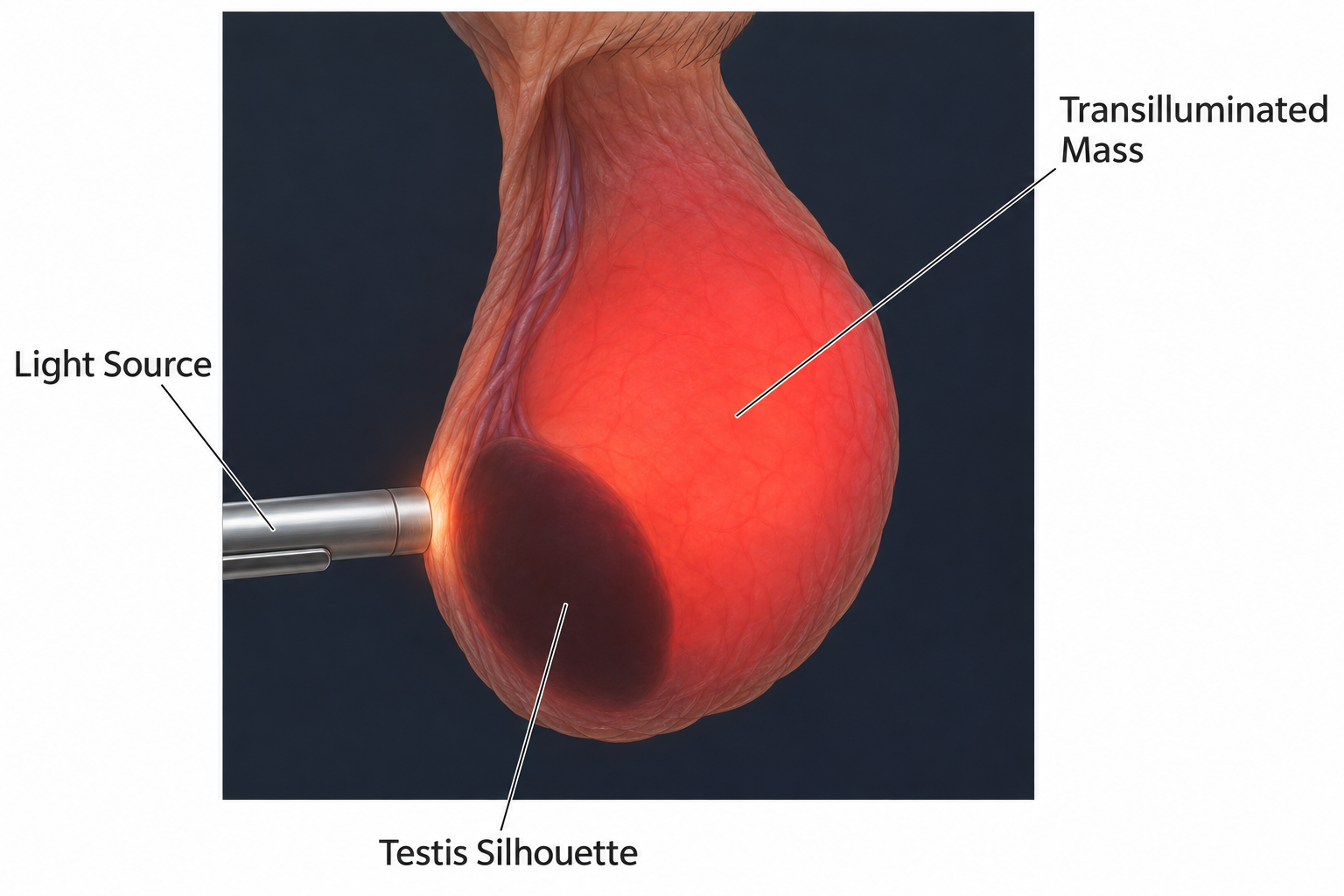
A 34-year-old male presents with a painless, gradual enlargement of the right scrotum over the past two months. On physical examination, the family nurse practitioner palpates a smooth, nontender, fluctuant mass anterior and superior to the right testicle. When a penlight is positioned firmly against the dependent posterior margin of the scrotal sac in a darkened exam room, the light illuminates the mass with a diffuse red glow. What is the most likely diagnosis?
Show answer & explanation
Correct answer: B
A hydrocele is a collection of peritoneal fluid within the tunica vaginalis that transilluminates clearly. Solid masses and blood do not transilluminate.
Ready for the real thing?
The full FNP-BC simulator has every exam-style question, timed mode, and instant scoring.